
Sonodynamic Therapy and Glioblastoma: Acoustics at the Edge of Cancer Treatment
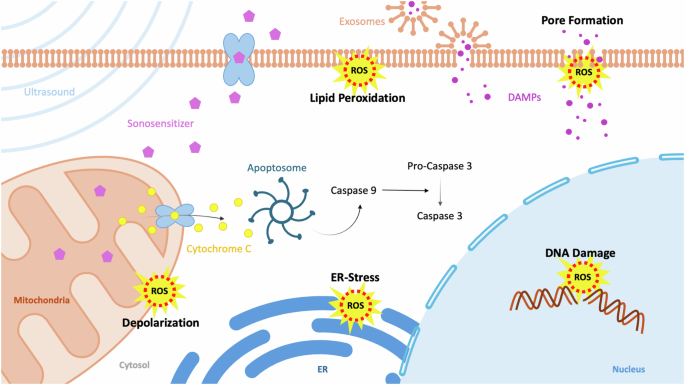
New research reviews preclinical evidence for sonodynamic therapy in glioblastoma treatment, highlighting acoustics' growing role in oncology and the challenges ahead.
Glioblastoma is among the most challenging cancers to treat. Its location within the brain, its ability to infiltrate surrounding tissue, and its resistance to conventional therapies have made it a persistent focus of research into novel treatment modalities. A new review published in npj Acoustics examines the preclinical evidence for sonodynamic therapy (SDT) in glioblastoma and the challenges that must be overcome to translate these findings into clinical practice.
Sonodynamic therapy uses focused ultrasound in combination with specialized chemical agents called sonosensitizers to selectively kill cancer cells. The mechanism involves acoustic cavitation — the formation and collapse of microscopic bubbles in tissue — which generates localized mechanical and chemical energy that activates the sonosensitizer and triggers cell death. When properly targeted, SDT can deliver therapeutic effects to deep tumor tissue while sparing surrounding healthy cells.
The appeal of SDT for glioblastoma specifically lies in several factors. The blood-brain barrier, which normally prevents most chemotherapy agents from reaching brain tumors, can be temporarily opened using focused ultrasound — a technique known as focused ultrasound-mediated blood-brain barrier disruption. This same capability could facilitate SDT delivery by enhancing sonosensitizer accumulation in tumor tissue. Additionally, the non-ionizing nature of ultrasound means SDT does not carry the radiation exposure risks associated with radiotherapy.
The preclinical evidence reviewed in this paper is encouraging but also underscores the significant translational challenges ahead. Achieving consistent sonosensitizer delivery to glioblastoma tissue, optimizing acoustic parameters for effective cavitation at brain tumor sites, and managing the risk of off-target effects in healthy neural tissue are all active areas of research. The step from promising animal model results to effective human treatment has historically been long and difficult in neuro-oncology.
What this research represents is a meaningful expansion of acoustics' role in medicine — from imaging and neuromodulation into direct therapeutic application against some of the hardest-to-treat cancers. The intersection of physical acoustics and oncology is producing genuinely novel approaches to century-old problems.
[Read the full piece](https://www.nature.com/articles/s44384-026-00051-y)
Ready to solve your noise challenge?
Get a Free Noise Assessment