
Sound as Medicine: Ultrasound Neurostimulation Opens New Frontiers in Depression Treatment
New research shows optimized ultrasound stimulation of the prefrontal cortex can reverse depression behaviors in preclinical models — expanding acoustics' role in medicine.
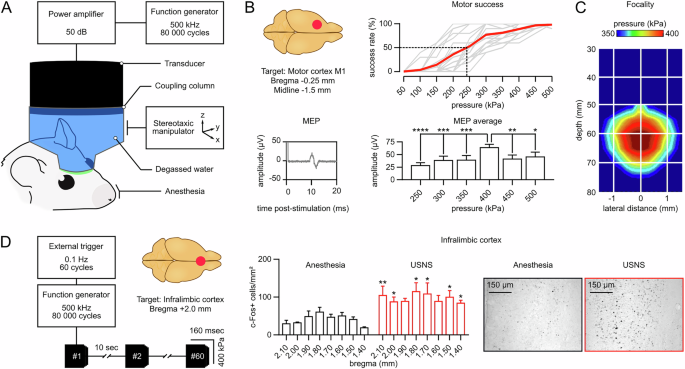
The therapeutic applications of acoustic energy have expanded dramatically in recent years, and new research published in npj Acoustics is pushing that frontier further. A team of researchers has demonstrated that optimized ultrasound neurostimulation of the ventromedial prefrontal cortex can reverse depression behaviors and normalize brain metabolism in preclinical models — a finding with significant implications for the future of non-pharmacological depression treatment.
Transcranial focused ultrasound (tFUS) is an emerging neuromodulation technique that uses tightly focused beams of ultrasound energy to stimulate or suppress activity in specific brain regions — without electrodes, without surgery, and without the cognitive side effects associated with some existing neuromodulation approaches. The ventromedial prefrontal cortex, a region implicated in emotional regulation and reward processing, is a natural target for depression research, and previous work had suggested tFUS could modulate its activity.
What distinguishes this study is the optimization component. Rather than simply demonstrating that ultrasound stimulation of the target region produces some measurable effect, the researchers systematically optimized the stimulation parameters — frequency, duty cycle, intensity, and spatial targeting — to maximize therapeutic benefit while minimizing off-target effects. This kind of parameter optimization is critical for translating a proof-of-concept finding into a clinically viable treatment.
The results are notable: optimized stimulation protocols reversed depression-related behaviors in the animal models studied and normalized metabolic activity in the brain regions implicated in depression. These are the kinds of outcomes that justify the considerable investment required to translate preclinical findings into human clinical trials.
For those who think of acoustics primarily in terms of noise control or architectural design, findings like this serve as a useful reminder of the breadth of the field. Sound is energy, and the ways that energy interacts with matter — including biological matter — are extraordinarily varied and increasingly well understood. The same physical principles that govern sound absorption in a concert hall also govern how focused ultrasound interacts with neural tissue. The applications differ enormously; the underlying physics does not.
[Read the full piece](https://www.nature.com/articles/s44384-026-00050-z)
Ready to solve your noise challenge?
Get a Free Noise Assessment