
Kittery Pulls the Plug on Emery Field Pickleball — Another Court Closed Over Noise
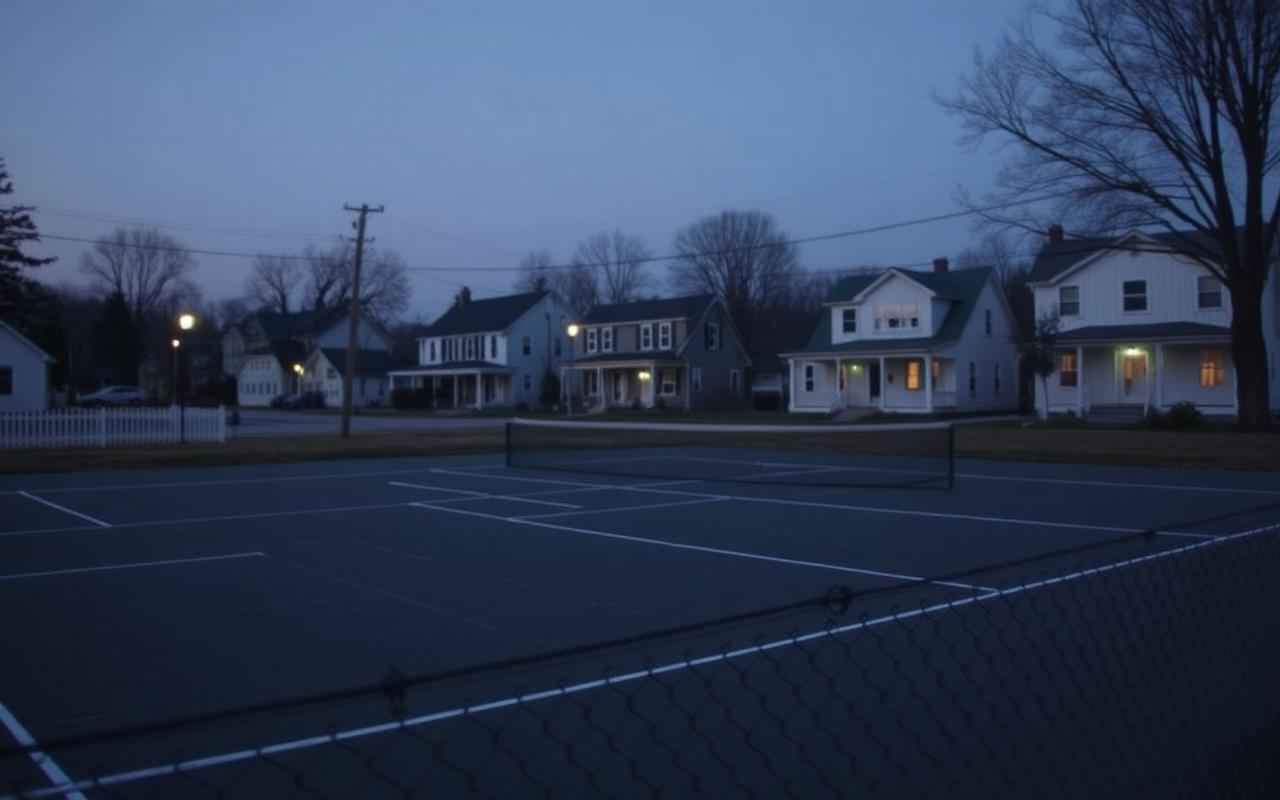
Kittery, Maine has shut down pickleball play at Emery Field after sustained noise complaints from neighbors. It's the latest in a string of municipal closures — and another preventable one.
Kittery, Maine has formally ended pickleball play at Emery Field. After months of escalating complaints from residents living adjacent to the courts, town officials confirmed in early April 2026 that the lined courts will not be reopened for pickleball use.
It's a small headline in a small town. It's also the latest entry in a growing national pattern: municipalities standing up pickleball courts inside residential neighborhoods, then quietly shutting them down when the noise complaints don't stop.
What Happened at Emery Field
Emery Field is a public recreation space in the heart of a Kittery residential neighborhood. Like many towns racing to meet pickleball demand, Kittery added court lines to existing pavement — a fast, low-cost way to open play. The courts were close to homes. Within months, the "pop-pop-pop" of paddles striking plastic balls became the dominant sound of the neighborhood.
Residents brought complaints to the town. The town listened, weighed the costs of mitigation against the political cost of restricting play, and chose closure.
No lawsuit. No engineering study. No mitigation attempt on the public record. Just another closed court.
Why This Keeps Happening
The pattern is now familiar — Martinez (CA), Boca Raton (FL), Niagara-on-the-Lake (ON), and now Kittery (ME). The mechanics rhyme:
- Courts are sited inside or adjacent to residential zones - Acoustic risk is not modeled before construction - Mitigation, if attempted, is reactive and often the wrong material - Complaints accumulate faster than the political will to fix them - Closure becomes the path of least resistance
The pickleball paddle produces a sharp, tonal impact noise centered around 1.2 kHz — a frequency the human ear is unusually sensitive to, and one that travels efficiently across open suburban terrain. Standard fencing, hedges, and even most generic sound walls do little to attenuate it.
The Assess, Mitigate, Monitor Framework
Every closure we've documented could have been prevented — or at minimum, defended — with the same three-phase discipline:
**Assess** — Before a single line is painted, model the noise. Map distances to the nearest residences, model propagation paths, and quantify expected sound pressure levels at the property line. For Emery Field, an assessment would have flagged the residential proximity as a critical-risk site requiring mitigation from day one.
**Mitigate** — Use engineered, frequency-tuned acoustic treatment designed for pickleball's 1.2 kHz signature. Absorptive barriers (not reflective ones like bare mass-loaded vinyl) sized for the site's specific geometry. Done right, mitigation reduces perceived noise by 50% or more — enough to keep courts open and neighbors quiet.
**Monitor** — Install continuous sound monitoring. Real, time-stamped data defuses complaints before they escalate into council meetings, and gives the town a defensible record when allegations are challenged.
The Cost of Closure vs. The Cost of Mitigation
A municipality typically spends $30,000–$80,000 to convert pavement to pickleball courts, plus the soft cost of community goodwill spent promoting the project. Closure wipes all of that out — and often the courts sit unusable, lined for a sport that can no longer be played there.
A complete Assess / Mitigate / Monitor program for a 2–4 court facility runs a fraction of that. It's the difference between a working community amenity and a padlocked gate.
The Bottom Line
Kittery's Emery Field didn't have to close. Neither did Martinez's Hidden Valley. The acoustic engineering exists. The frequency profile of the sport is well understood. The mitigation products are commercially available and proven in the field.
What's missing in most municipal projects is process — a deliberate Assess, Mitigate, Monitor workflow built into the planning phase, not bolted on after the complaints arrive.
If you're a town planner, parks director, HOA board, or facility operator considering new courts — or trying to save existing ones — the playbook is no longer a mystery.
Get a free noise risk assessment at slncr.com/assessment.
Ready to solve your noise challenge?
Get a Free Noise Assessment