
Why Is My Gym So Loud? The Science Behind Indoor Sports Noise
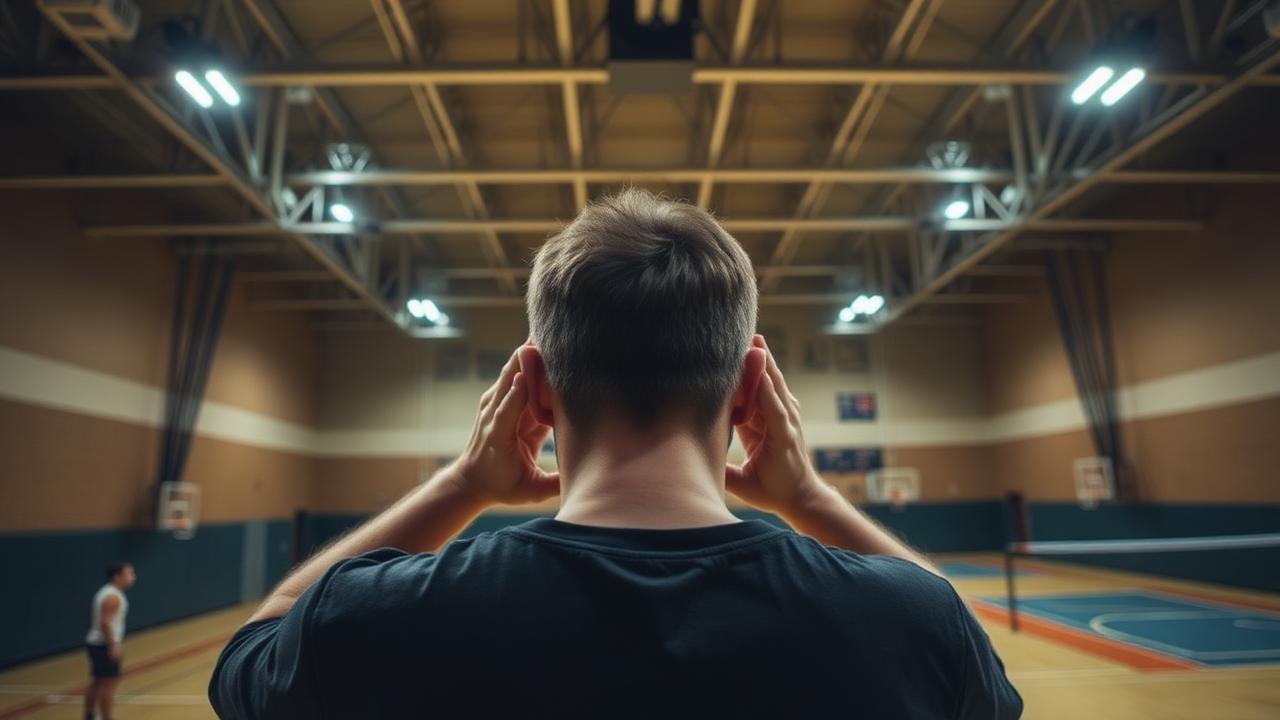
Your gym is loud because of physics, not pickleball. Learn why hard surfaces, high ceilings, and reverberant spaces amplify every sound — and what you can do about it without changing how you play.
You walked into your gym, heard the noise, and thought: "This can't be normal." You're right — it's not. But the problem isn't the sport. It's the building.
The Three Reasons Your Gym Is Loud
Every indoor sports facility that sounds unbearably loud shares three characteristics:
1. Hard, reflective surfaces everywhere — Concrete block, CMU, steel decking, glass, and polished hardwood reflect over 95% of sound energy back into the room. Nothing absorbs it.
2. High ceilings with large volume — Sound has more space to bounce around and takes longer to decay. A 30-foot ceiling doubles the reverberation time compared to a 15-foot ceiling with the same floor area.
3. Impulsive sound sources — Pickleball paddles, basketball bounces, and volleyball spikes generate sharp, sudden peaks that are acoustically more demanding than continuous noise sources like music or conversation.
The Physics: It's Called Reverberation
When you clap your hands in your gym and hear the sound ring out for 3, 4, or even 5 seconds, that's reverberation. Technically, it's measured as RT60 — the time for sound to decay by 60 decibels.
A well-designed sports facility has an RT60 of 1.2–1.8 seconds. An untreated gym typically measures 3.0–5.0+ seconds. That difference means every sound overlaps with the next, creating a wall of noise that's exhausting, disorienting, and potentially harmful.
At sustained levels above 85 dB — which is common in untreated multi-court pickleball facilities — OSHA considers the environment a hearing hazard for staff with extended exposure.
Why Turning Down the Music Won't Help
Facility managers often try to address noise by limiting music volume, asking players to be quieter, or restricting court hours. None of these address the root cause. The building itself is the amplifier.
A single pickleball hit generates about 70–85 dB at the source. In a reverberant space, those hits stack — each new impact adds to the still-decaying sound from previous hits. The result is a sustained ambient noise level that's 10–15 dB higher than any individual event.
What Actually Fixes It
The solution is absorption — adding materials to your walls and ceiling that convert sound energy into heat instead of bouncing it back into the room. This is measured as NRC (Noise Reduction Coefficient). Materials with NRC 0.85+ make a dramatic difference.
Covering just 15–25% of wall and ceiling area with high-NRC panels can cut RT60 in half, dropping perceived noise levels by 6–10 dB. That's the difference between "painfully loud" and "comfortable."
Start With Data, Not Guesswork
Before buying anything, measure the problem. The SLN/CR Acoustic Snapshot takes your room dimensions and surface materials and calculates your current RT60, target RT60, and exact treatment recommendation — in under 5 minutes, completely free.
Get your free Acoustic Snapshot at slncr.com/assessment
Ready to solve your noise challenge?
Get a Free Noise Assessment