
A new video-acoustic camera is changing how we observe the Arctic seafloor
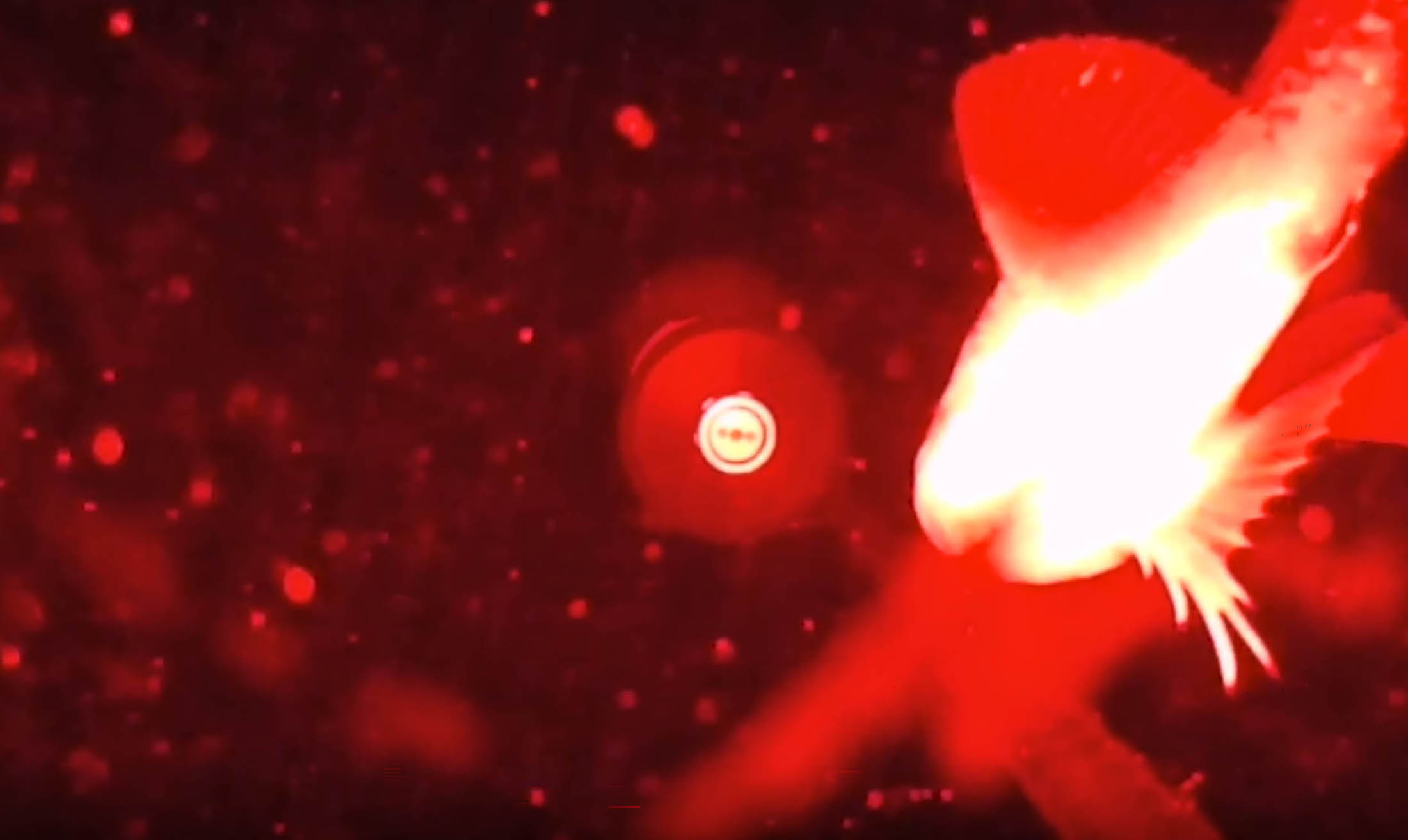
A 33-pound rig combining red LEDs, a hydrophone and a sound recorder spent eight days on a Greenland fjord floor, capturing what nets and sonar typically miss.
Scientific work on the Arctic seafloor has historically meant compromise. Researchers either drag nets, which crush soft-bodied animals and tell you only what was in the bag, or they bounce sound waves off the water column, which tells you densities but not behaviour. A new combined video-and-acoustic camera system, developed by a team at Hokkaido University, has just demonstrated a third way and the early results are striking.
Led by Dr. Evgeny Podolskiy at Hokkaido's Arctic Research Center, the team deployed a 33-pound, single-box rig on the floor of Inglefield Bredning, a glacial fjord in northwest Greenland, on August 1, 2025. The setup pairs an upward-pointing camera and two red LED lights with a sound recorder, a hydrophone and an acoustic release for retrieval. Choosing red lighting was deliberate. Most deep-sea organisms, including narwhals and other cetaceans, cannot see well at far-red wavelengths, which makes the lamps effectively invisible to the animals being observed. The trade-off is range; red light is absorbed quickly in water, so the camera's useful field is only one to three feet. Inside that small window, however, behaviours that nets and sonar can't capture become visible.
The rig sat 853 feet below the surface for eight days and recorded in 10-minute clips with 10-minute pauses, producing about 37 hours of footage. Across that footage the team logged 478 organisms. Eighty-eight percent were amphipods, copepods, jellyfish and arrowworms. The remaining 12 percent included a snailfish, from the family that holds the depth record for fish at nearly 27,000 feet, drifting backward with its tail curled in a posture that has rarely been documented in situ.
The acoustic side of the instrument is just as important as the camera. Pairing video with synchronised hydrophone recordings lets the team correlate what an animal is doing with the sound it produces or responds to, a layer that nets and standalone echosounders simply can't provide. For Arctic researchers trying to track how a rapidly changing climate is reshaping marine ecosystems, that combined record is hard to overstate. Expect more compact, low-light, sound-aware platforms like this one in the next round of polar fieldwork.
[Read the full piece](https://www.earth.com/news/video-acoustic-camera-system-developed-to-observe-arctic-seafloor/)
Ready to solve your noise challenge?
Get a Free Noise Assessment