
Noise: A Growing Risk at Indoor Facilities
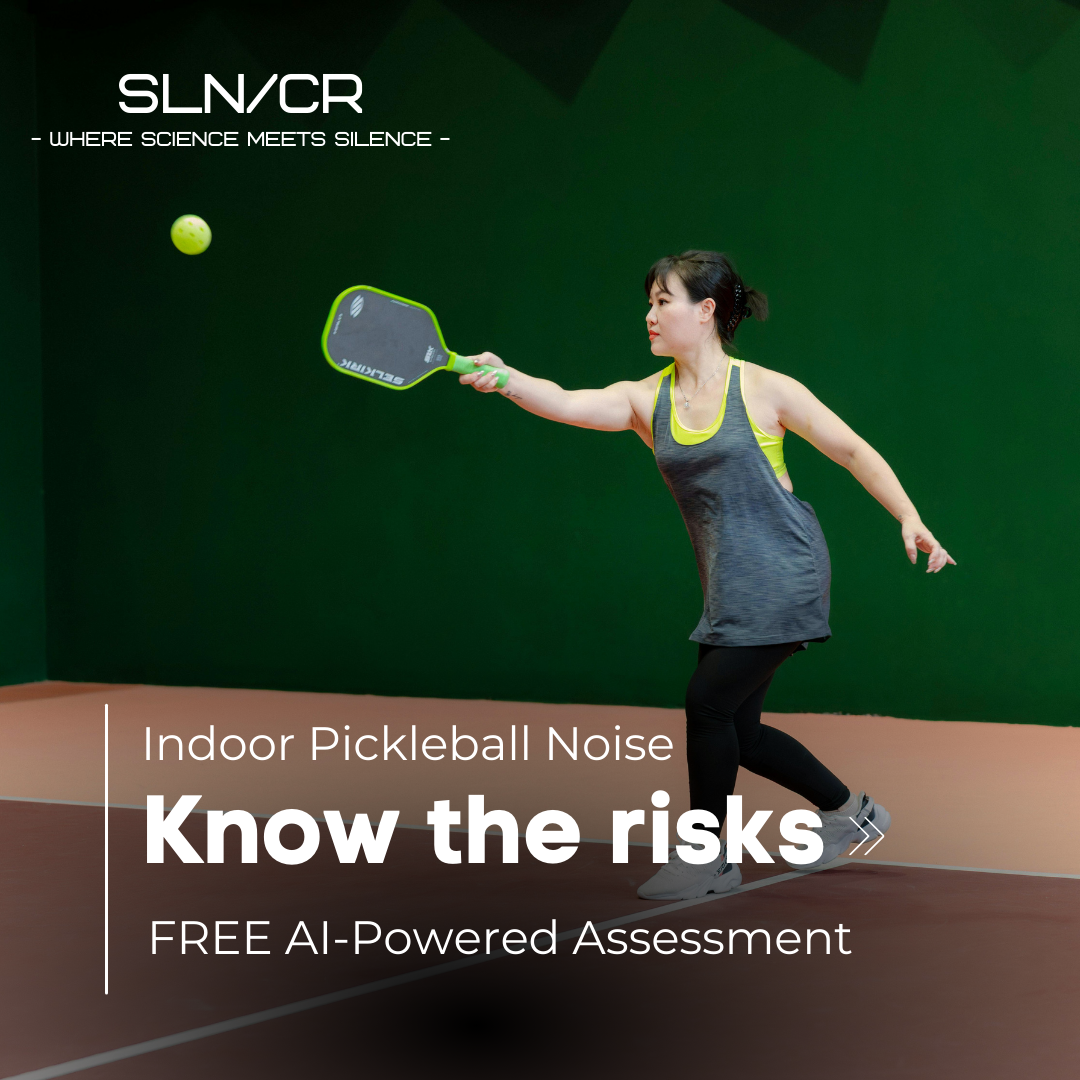
Indoor pickleball facilities are booming — but so are the noise complaints. Here's why acoustic management isn't optional anymore, and what smart operators are doing about it.
The indoor pickleball boom is real. Warehouses, church gyms, recreation centers, and purpose-built facilities are converting to pickleball at an unprecedented rate. But there's a problem hiding in plain sight — or rather, plain sound.
Indoor facilities amplify pickleball noise in ways outdoor courts simply don't. Hard surfaces — concrete floors, metal roofing, drywall — create an echo chamber effect. A single court outdoors might register 70 dB at the property line. That same court indoors can push 85–90 dB inside the building, a level OSHA flags for hearing protection in workplace settings.
This isn't a theoretical risk. Facility operators are already facing consequences. Player complaints about headaches and ringing ears. Staff turnover driven by daily noise exposure. Neighboring tenants in mixed-use buildings filing formal complaints. And in the worst cases, lease terminations or denied permits for expansion.
The core issue is reverberation. Sound bounces off hard, parallel surfaces and compounds. The technical measure — RT60, or the time it takes sound to decay by 60 decibels — is often 3 to 5 seconds in untreated indoor facilities. The target for comfortable play is under 1.5 seconds.
So what are smart operators doing?
First, they're assessing before they build. SLN/CR's free noise risk assessment helps operators understand their acoustic profile before investing in mitigation. Knowing your RT60, understanding your surface materials, and mapping your noise hot spots is step one.
Second, they're installing purpose-built acoustic treatments. SLN/CR's NanoBaffle system — engineered specifically for sports court environments — delivers an NRC of 1.15, meaning it absorbs more sound energy than it receives. Ceiling-hung baffles and wall-mounted panels work together to slash reverberation time, often cutting RT60 in half or more.
Third, they're thinking about noise as a business metric. Quieter facilities retain more members, attract more tournament bookings, and avoid costly disputes with neighbors and regulators.
The facilities that act now will own the market. The ones that wait will spend more later — or worse, lose their lease.
Indoor noise isn't a nuisance. It's a business risk. And it has a solution.
Ready to solve your noise challenge?
Get a Free Noise Assessment