
Martinez Permanently Closes Pickleball Courts After Noise Complaints — What Went Wrong
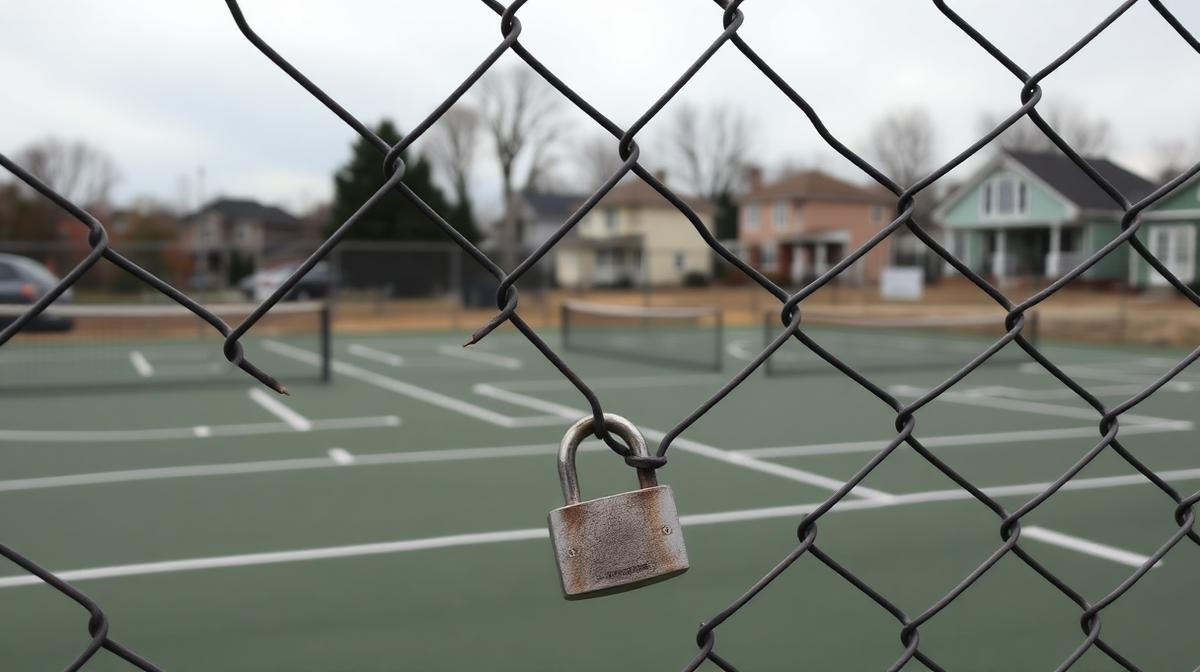
The Martinez City Council voted 4-0 to permanently close eight pickleball courts at Hidden Valley Park — just one year after opening. The case is a textbook example of what happens when courts are built without acoustic planning.
The Martinez City Council has voted to permanently close eight pickleball courts at Hidden Valley Park — courts that opened barely a year ago. The 4-0 vote marks the end of a facility that was funded largely by federal grant dollars but plagued from the start by noise, trash, and traffic complaints from neighboring residents.
This isn't just a local story. It's a case study in what happens when pickleball facilities are built without acoustic planning.
The Timeline: From Grand Opening to Padlocked Gates
The Hidden Valley Sports Courts opened in February 2025 in a residential area of Martinez, California. Some homes sat as close as 50 to 100 feet from the courts. Almost immediately, the facility became "too popular for its own good," drawing large crowds and unrelenting noise complaints.
By September 2025, the City Council had already reduced available hours and days. But the problems continued — residents reported parties with alcohol, smoking, loud noise, and players breaking in during closed hours to play anyway.
One resident, Tyler Harding, told the council: "I feel like we deserve the right to peace and privacy in our own home without living next to what sounds like a gun range peppered with profanity."
A resident survey conducted last fall led city staff to recommend permanent closure. On March 19, 2026, the council approved it. City employees immediately began locking the facility and removing nets.
The Core Problem: Location Without Mitigation
Councilmember Satinder Malhi, a self-described long-time supporter of pickleball, put it plainly:
"This is not where any of us had hoped we would end up. What this experience has shown is that yes, location matters. Facilities like this need adequate space, appropriate buffering and setbacks, and thoughtful planning so they can thrive without negatively impacting nearby residents."
This is exactly right — and it's the lesson we see repeated across the country. Pickleball generates impact noise in the 70–90 dB range at source. At 50–100 feet from residential homes, without any sound barrier infrastructure, that's a recipe for conflict.
Notably, published photos of the Hidden Valley courts show what appears to be mass loaded vinyl (MLV) material installed as a sound barrier. This suggests the city did attempt some degree of noise mitigation. However, MLV is a reflective material — it blocks sound transmission through the barrier itself but reflects energy back toward the courts and surrounding area rather than absorbing it. Without an absorptive face, reflective barriers can redistribute noise rather than meaningfully reduce it for all affected neighbors. This may help explain why complaints persisted despite the effort.
The Martinez situation didn't fail because of pickleball. It failed because of planning.
What an Assess, Mitigate, and Monitor Approach Would Have Changed
Had the city incorporated a structured acoustic framework into the original court design, this outcome was entirely preventable. That framework breaks down into three phases:
**Assess** — Professional acoustic modeling before construction would have flagged the 50–100 foot proximity as a critical risk factor. Minimum recommended setbacks for unmitigated courts are typically 300+ feet from residential structures. An assessment would have identified the specific noise exposure for each neighboring property and informed the barrier design before a single court was poured.
**Mitigate** — Engineered absorptive barriers (like SLN/CR's NanoBaffle system) designed for the site's specific geometry can reduce noise transmission by 15–25 dB. Unlike reflective materials such as MLV, absorptive panels convert sound energy into heat rather than bouncing it elsewhere. Court orientation relative to neighboring homes and strategic barrier placement can further redirect residual sound energy away from sensitive receivers.
**Monitor** — Continuous sound level monitoring provides real-time data transparency and helps demonstrate compliance with local noise ordinances. Monitoring systems defuse complaints before they escalate to litigation by giving both residents and facility operators objective evidence of actual noise levels.
The Ripple Effect
Martinez now has zero free public pickleball courts. The city's staff report noted that residents must travel to Concord (23 courts), Walnut Creek (10 courts), or Pleasant Hill (4 courts) to play.
The adjacent tennis court and basketball court remain open — a pointed reminder that pickleball's unique acoustic signature (the sharp, percussive "pop" of paddle-on-ball) demands specific engineering attention that other sports do not.
Meanwhile, the city faces the question of what to do with the court footprint. The "long-term repurposing" will be determined later, but the federal grant dollars that built the facility are already spent.
The Takeaway for Municipalities and Developers
Martinez is not an isolated case. Communities across the country — from California to Florida to Colorado — are grappling with the same tension: explosive demand for pickleball versus legitimate noise concerns from residents.
The pattern is predictable: 1. Courts are built in response to demand 2. No acoustic mitigation is included in the budget 3. Noise complaints begin within weeks 4. Hours are restricted 5. Complaints continue 6. Courts are closed or face litigation
Breaking this cycle requires one thing: building sound mitigation into the project from day one. The cost of proper acoustic engineering is a fraction of the cost of closure, litigation, and community fallout.
Don't Let This Happen to Your Facility
SLN/CR has helped municipalities, recreation departments, and private facilities across the country implement data-driven noise solutions before conflict begins. Our free Acoustic Snapshot assessment provides professional noise modeling and mitigation recommendations tailored to your specific site.
Get your free noise assessment at slncr.com/assessment
Ready to solve your noise challenge?
Get a Free Noise Assessment