
California Communities Are Banning Pickleball Over Noise — Here's What They're Missing
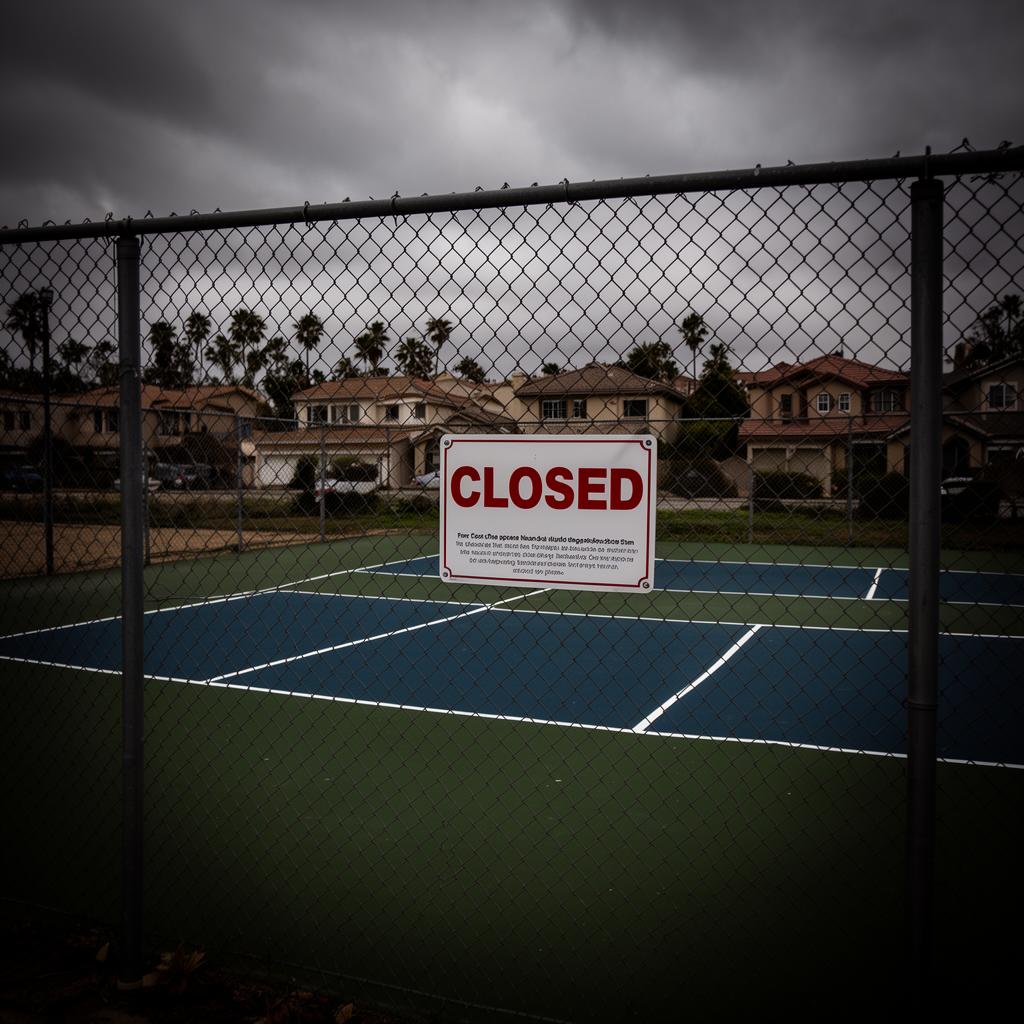
From Carmel to Martinez, California cities are shutting down pickleball courts over noise complaints. But court closures aren't a solution — they're a symptom of missing acoustic planning. Here's what every community should know before building or banning.
In March 2026, the city of Carmel-by-the-Sea, California voted to ban pickleball at Forest Hill Park. Just miles away, Martinez closed its Hidden Valley Park courts — the same facility that received a $1.7 million expansion just years earlier. These aren't isolated incidents. They're symptoms of a systemic problem that's playing out in communities across the country.
Bans Are Spreading — and They're Expensive
When a city invests seven figures into a court facility and then shuts it down because of noise complaints, everyone loses. Players lose access. Residents lose patience. And taxpayers lose money. In Martinez, the city had already spent $1.7 million on its Hidden Valley Park expansion before noise complaints from neighboring residents forced the courts to close.
According to reporting from KTVU and CBS Bay Area, residents described the noise as "constant" and "unbearable," with sound carrying across property lines well beyond what anyone anticipated during planning. The pattern is consistent: build first, deal with noise later.
This Is Not Just a California Problem
The Times Now recently reported that countries like Vietnam and Singapore are experimenting with foam balls — so-called "silent pickleball" — to try to reduce the distinctive pop of paddle-on-ball impact. While creative, these workarounds change the game itself. Players don't want a muted version of their sport. Communities don't want to ban a sport that brings health benefits, social connection, and economic activity.
The real issue isn't the ball. It's the absence of pre-construction noise planning.
What's Actually Missing: Acoustic Data
Every one of these court closures shares a common thread — no noise assessment was conducted before construction began. Without baseline acoustic data, communities have no way to predict how sound will travel, no defense when complaints arrive, and no engineering basis for choosing mitigation solutions.
A proper noise risk assessment takes less than five minutes to request and can prevent millions in wasted investment. It measures ambient sound levels, models projected noise propagation, and identifies whether barriers, baffles, or site redesign are needed — before the first paddle is swung.
The Proven Framework: Assess, Mitigate, Monitor
Communities that get this right follow a three-step approach:
1. Assess — Conduct a professional noise risk assessment before breaking ground. Understand how sound will interact with the site, neighboring properties, and local noise ordinances.
2. Mitigate — Select the right barrier technology based on the environment. For outdoor courts, STC-rated sound barriers block noise transmission to neighbors. For indoor facilities, NRC-rated acoustic panels absorb reverberant energy inside the space.
3. Monitor — Deploy ongoing sound monitoring to demonstrate compliance and build trust with the surrounding community.
This framework has been used successfully by facilities across the U.S. and Canada. It's not theoretical — it's proven.
Court Closures Are Preventable
The story in California is frustrating because it was entirely avoidable. The technology exists. The assessment tools exist. The engineering knowledge exists. What's missing is awareness — too many facility planners, parks departments, and developers still treat noise as an afterthought.
If you're planning pickleball courts for your community, don't wait for a ban. Don't wait for a lawsuit. Don't wait for a $1.7 million lesson.
Start with a free noise risk assessment. It takes five minutes and could save your community years of conflict.
Ready to solve your noise challenge?
Get a Free Noise Assessment